Aliens land, social media banned
Sometimes I find writing comes easy, sometimes I need a piece of art or music or a long walk as a distraction to help crank my thinking process into gear.
Steven Spielberg's latest epic, Disclosure Day, provided the spark for this post. It's a movie I found thought provoking for all the wrong reasons, but it certainly helped bring a few disconnected mind fragments together. Thanks Steven!
[spoiler alert: please scroll/swipe past the next paragraph if you want to avoid reveals]
I still don't really know what the film was about to be honest. I mean, I do, broadly speaking, but it was just such a mess of earnest staring, clunking set pieces, the same car chase repeated about nine times, Colin Firth manically clutching a multipurpose MacGuffin, nuns, and people saying so many VERY DEEP THINGS it got to the stage I was stifling giggles rather than pondering questions of faith, and interspecies connection, and why we're all here. Which is what I think I was meant to be contemplating, though I couldn't swear on it. By the time they (literally) wheeled out a big alien dude at the end I was so beyond caring I started to write this blogpost in my head and casually pick shards of popcorn off my t-shirt.
Anyway, I very much digress.
One of the points that struck me (and which I'm going to – buckle up, kids! – use to clumsily pivot to allow some analysis of current affairs) was the way technology was represented. Specifically mobile technology. Specifically specifically social media and how attention is harvested.
In Spielberg's world there still exists a time and place where humankind stops and takes notice. Where incidents of such magnitude have the ability to cut through the noise and change our collective paths.
The last fifteen minutes of Disclosure Day contain multiple shots of people staring at their phones, wide-eyed and speechless, consumed by a single content feed; they know nothing will be the same again. Wars stop, divisions heal, humanity comes together.
In real life this would translate more like: people staring at their phones, wide-eyed and speechless, consumed by a single content feed; they know nothing will be... oh, wait.
* Notification pings repeatedly about the baseball cap someone's lost on the school groupchat *
* Anxiously scroll the thread you're following (and feel nervous about interacting with) and daydream about how you will someday respond with winning observations *
* Desperately try to recall who's cooking dinner tonight from out-of-date shared online calendar *
* Open work email client to speed read + acknowledge a few messages so it seems like you're on top of your game *
* Go back to repeat-viewing the tiktok with the funny minion impression *
Sorry alien chums – we'll get back to watching your clip later!
I'm old enough to remember queues around the block for E.T., and the reverberating echoes of the Frost/Nixon interview, and Live Aid, and the death of Diana. Events that became cultural touchpoints and, on the surface at least, had the power to change trajectories.
We seem so far beyond the days where a film, or a TV show, or a news event, or an online campaign (Blair Witch anyone?) could fight off the fragmentation and capture the zeitgeist.
Spielberg portrays the devices in our hands as mechanisms for broadcast, where content consumption is linear and plays out uninterrupted. It captivates, it influences, it sways us en masse.
Depressing as it may be, we live in an omni-omnichannel world; the medium is all the messages. And then some.
To me, seeing technology portrayed in this way feels as incongruous as the Starbucks cup in Game of Thrones: comically out of place and a bit embarrassing. Wilfully ignoring how the tech works fundamentally undermines the point being made.
Speaking of ignoring how technology works undermining the point… let's talk about banning social media.
The perplexing social media ban
As the parent of tweenage boys, I feel reasonably well informed about how technology encroaches into almost every aspect of daily life.
I've watched as my kids hop from screen to screen to screen, their wee brains needing to be dopamine fed by any means necessary.
I've observed – half amused, half alarmed – as three children in the back of the car crowd round one microscopic smartwatch when every other device has been removed.
I've rolled my eyes many, many times as they push back when asked to shut the laptop or turn the iPad off. "Just after this", "just let me finish", "just one more minute" – as if consuming whatever banal, indistinguishable YouTube Short they're watching is a life or death issue.
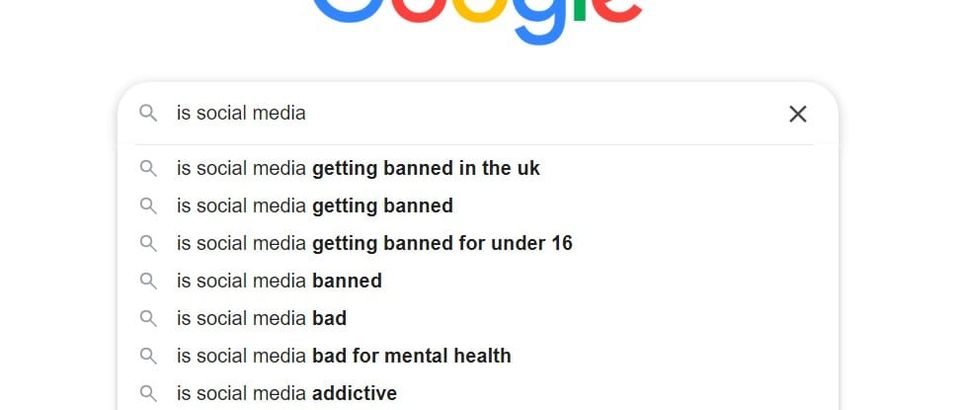
And of course I'm very much aware of a rising tide of toxic masculinity, malignant algorithms leading to heinous acts and tragic events, and how the allure of content creators is almost always a hustle for cash – some of the core reasons why the UK government's decision to ban social media for under 16s is such a hot topic.
Believe me, I'd far rather be living in Spielberg's sentimental alternative reality.
However, I also think banning social media for under 16s is supremely wrong headed.
As much as I can't abide the pervasive back-to-back stream of dubious unregulated videos being beamed into my home, I also can't deny the positive elements of YouTube – this isn‘t a simple binary issue.
Coding, cooking, music discovery and eclectic general knowledge are all areas where interests have been piqued, and topics further explored.
Could this information have been sourced elsewhere? Undoubtedly. But when I watch my kids use YouTube and other apps in ways so very different to myself, I realise I'm probably not the best judge.
The fact YouTube's rise as a general purpose library-of-everything coincides with a period when actual libraries have been closed and stripped bare feels worthy of mention here.
Similarly, as an anti-play culture has prevailed, youth clubs, leisure centres and playgrounds have vanished, leaving impoverished families with limited, sometimes non-existent, low and no-cost options to provide outlets for children.
It's for that reason I really struggle with Jonathan Haidt's The Anxious Generation, almost certainly the biggest contributory factor to why social media bans are this season's must-have.
Of course I'm sympathetic to his arguments around rising adolescent anxiety, depression and self-harm, but the assertion these lie solely at the feet of smartphone-era social media while the systematic erosion of initiatives, community spaces, and services aimed at children has been taking place at exactly the same time gets largely ignored.
Any sense there may, heaven forbid, be positive elements to social media is also conveniently shoved to one side, as referenced in this piece from the Institute of Development Studies:
"...little attention has been given to the impact on groups of marginalised children and young people for whom the digital connections offered by social media and other internet-based platforms are vital.
The impact of restrictive approaches, for example, on refugee and migrant young people, LGBTQ+ children, and children with disabilities, as well as other invisibilised groups, is not greatly understood and notably absent from both policy and public discourse".
Just in case you think this is a zero sum game for everyone, private equity companies are simultaneously extracting huge amounts of wealth out of the system under the guise of providing for children.
I know I'm mixing up my causation and correlation terribly here, however society's ills and the wellbeing of our kids can't be shoved neatly into a social media-shaped box. I guess rampant austerity and malevolent capitalism are harder nuts to crack, eh?
In case you feel I'm picking the wrong targets and shifting blame around, the massive elephant in the room is every. single. negative. thing. being attributed to social media is not some peculiar isolated condition that only affects children.
We're all being worked over by the same machine: the algorithmic nudging, the doomscrolling, the bottomless feed engineered so you never quite reach the end, the cheerful willingness to monetise your worst impulses.
So there's something deeply odd about a law that stares into the cesspit and decides the dangerous variable is 'being under sixteen' when the dangerous variable is the inherent design. Thus we have a ban centring the problem on our children while the faulty component is sitting in a server farm silently optimising content for maximum engagement.
Unlike Disclosure Day, the social media monolith doesn't sway us en masse like the big alien reveal; it does the opposite. Splintering our attention into a thousand shiny pieces and selling them on to the highest bidder.
We're proposing to ID-check the entire population, inconvenience every adult, and toss teenagers off a cliff at sixteen, handing them the full unfiltered torrent overnight after we've spent years keeping them away from it. All so we can avoid the harsh truth: the platforms are built to harm, by design, for profit, and that's true whether you're six or sixty.
You could perhaps argue that's why the ban is the policy of choice. Not because it's the best answer, but because it's the simplest one.
Telling parents to police their kids is cheap whereas telling Meta and Google and ByteDance to dismantle the very engine that prints their money is, ummm, trickier. Taking on some of the wealthiest entities on the planet is the kind of fight that takes years and lawyers and much political nerve.
If we genuinely accept this design is so manipulative it can override a teenager's judgement, then the most honest response would be to regulate the manipulation for everyone.
And the government could aim the legislation at the thing actually doing the damage. Y'know, force addictive features to be turned off by default, mandate chronological feeds you can intuitively choose, introduce friction into the infinite scroll, shine a strong critical light on the algorithms, and introduce real penalties on profiting from demonstrable harm.
Oh, and maybe find a way to hold trillionaire platform-owners to account when their algorithm rewards the most abhorrent and bottom-feeding behaviour (oh God, not back to this again).
But no, let's impose an ill-conceived populist solution that keeps Mumsnet happy and conveniently allow the companies who built all the bad stuff to carry on building.
Disclosure Day at least had the decency to be fiction, such a pity there's no real-life big alien dude to wheel out and sort this infernal mess.
Further reading:
- Heather Burns' informative piece in Nerve highlights just how problematic and easily circumvented age verification is
- Right diagnosis, wrong prescription from Amnesty
- Taylor Lorenz's recent article in The Guardian argues how big tech benefits from a ban: The UK’s social media ban for under-16s has just empowered big tech
👽 Thank you for reading.
Member discussion